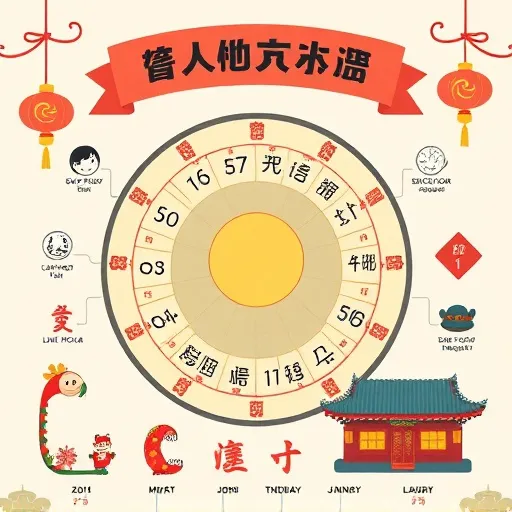
Lunisolar not lunar
Why the Chinese Calendar Is "Lunisolar" and Not Just Lunar
Here's the biggest misconception people have when they first learn how to read the Chinese lunar calendar for festivals: they assume it's purely a moon-based system. It's not. The traditional Chinese calendar is actually a lunisolar calendar, meaning it tracks both the moon's phases and the sun's annual journey. That dual tracking is the secret sauce behind the whole thing, and honestly, once you get it, everything else clicks into place.
Each lunar month kicks off on the day of the astronomical new moon, and the 15th day of every month lands on or right around the full moon. That's no coincidence—it's why so many traditional festivals cluster around mid-month. The full moon symbolizes reunion, wholeness, and gratitude in Chinese culture. But here's the twist: the calendar also monitors the sun's position through solar terms, a set of 24 seasonal markers that keep the system locked to the agricultural year. Without those solar anchors, the months would drift lazily through the seasons. So when you're figuring out how to read the Chinese lunar calendar for festivals, remember you're dealing with two interlocking gears—moon and sun—not just one.
Grasping this dual nature is the foundation for everything else. A lunar month runs either 29 or 30 days. Twelve of them add up to roughly 354 days, while a solar year is about 365.24 days. That gap of about 11 days per year is exactly why leap months exist—and why anyone serious about how to read the Chinese lunar calendar for festivals needs to understand the leap month rule. Skip it, and you'll show up to the wrong celebration on the wrong day.
Month Names, Day Counting, and the Sexagenary Cycle System in the Chinese Calendar
Before you can decode festival dates, you need the vocabulary. The traditional calendar numbers its months quite differently from the familiar January-to-December framework. Months are labeled first through twelfth using characters like , , , , and so on. The first month is special—it houses the Lunar New Year and gets the character instead of . This is step one in how to read the Chinese lunar calendar for festivals: train your eyes to spot and know you're in the opening month of the year.
Days follow a predictable pattern. Days 1–10 use the prefix (chū), meaning "beginning"—so day three is and day ten is . Days 11–19 stack with the digit. Days 20–29 use plus the digit. Day 30 is simply . That's why festival names like (Laba Festival) or (Lantern Festival) become instantly readable once you know the pattern. Practicing this pattern is honestly the fastest way to master how to read the Chinese lunar calendar for festivals without memorizing a giant chart.
Then there's the sexagenary cycle—a 60-year loop formed by pairing ten heavenly stems with twelve earthly branches. Each year, month, and day gets its own two-character label. You don't need to memorize the whole cycle, but recognizing that a "jiazi year" refers to a specific slot in that 60-year rotation helps when you're reading temple calendars, almanacs, or heritage materials. Most modern festival calendars print these designations alongside the Gregorian date, so spotting them prevents confusion. It's a small detail, but it matters when you're learning how to read the Chinese lunar calendar for festivals from older or more formal sources.
Leap Months, Solar Terms, and Their Impact on Traditional Festivals and Gregorian Dates
Here's where things get genuinely fascinating—and where most festival-reading errors happen. Because 12 lunar months total roughly 354 days and a tropical year is about 365.24 days, the calendar falls behind the seasons by about 11 days annually. Left unchecked, the Lunar New Year would eventually drift into summer. The fix? A leap month gets inserted roughly every two to three years—seven leap months in every 19-year cycle, to be precise. The rule: a leap month appears when a lunar month contains no major solar term. Since there are 24 solar terms and only 12 or 13 months, some months end up term-less and get repeated.
For festival purposes, the key takeaway is this: festivals generally don't get celebrated twice during a leap month. If a festival date falls in a leap month, standard practice is to celebrate in the regular (non-leap) month. Knowing this rule is essential for how to read the Chinese lunar calendar for festivals accurately. The good news? 2026 has no leap month, which simplifies everything for this year's planning. But file the rule away—you'll need it when the next leap month rolls around.
While most major festivals follow lunar dates, several important observances track solar terms instead. The Qingming Festival falls on "Clear and Bright," usually around April 4–5. The Winter Solstice lands around December 21–22. This distinction matters when you're learning how to read the Chinese lunar calendar for festivals, because a well-made festival calendar marks both types of dates—moon-tied ones like Lunar New Year, Dragon Boat Festival, and Mid-Autumn Festival, and sun-tied ones like Qingming and the Winter Solstice.
2026 Festival Dates: A Practical Walkthrough of How to Read the Chinese Lunar Calendar for Festivals
Let's apply the method to real dates for 2026. The Lunar New Year (Spring Festival) lands on February 17—first day of the first month, with celebrations running through the fifteenth day. The Lantern Festival hits March 3 (fifteenth day of the first month, the first full moon of the year). The Dragon Boat Festival arrives June 19 (fifth day of the fifth month). Qixi Festival falls August 19 (seventh day of the seventh month). The Mid-Autumn Festival comes September 25 (fifteenth day of the eighth month). Double Ninth Festival is October 18 (ninth day of the ninth month). The Laba Festival lands January 26 (eighth day of the twelfth month), and Qingming falls around April 4–5. This is how to read the Chinese lunar calendar for festivals in action—and notice the pattern: most major celebrations land on the fifteenth (full moon) or on doubled numbers like the fifth, seventh, or ninth.
When you're planning around these dates—whether for travel, shopping, or events—book accommodations early for full-moon festivals like Mid-Autumn and Lantern Festival. Watch for the Little New Year on the twenty-third or twenty-fourth day of the twelfth month, when businesses start adjusting hours. And always use bilingual calendars rather than manual conversion—new moon dates are astronomical events that require precise data. Mastering how to read the Chinese lunar calendar for festivals isn't just about decoding characters; it's about seeing how astronomy, agriculture, and Chinese culture weave together into one elegant system. Start with month names, the / / day pattern, and the leap month concept, and within a few weeks you'll be reading traditional calendars with genuine confidence. The 2026 cycle—no leap month, clean sequence, plenty of celebrations—is a perfect year to put your new skill to work.